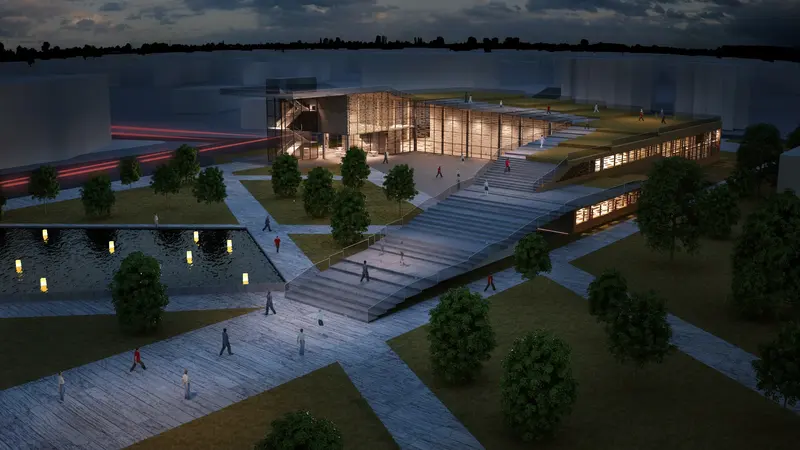
Çanakkale War Research Centre
Competition / Çanakkale

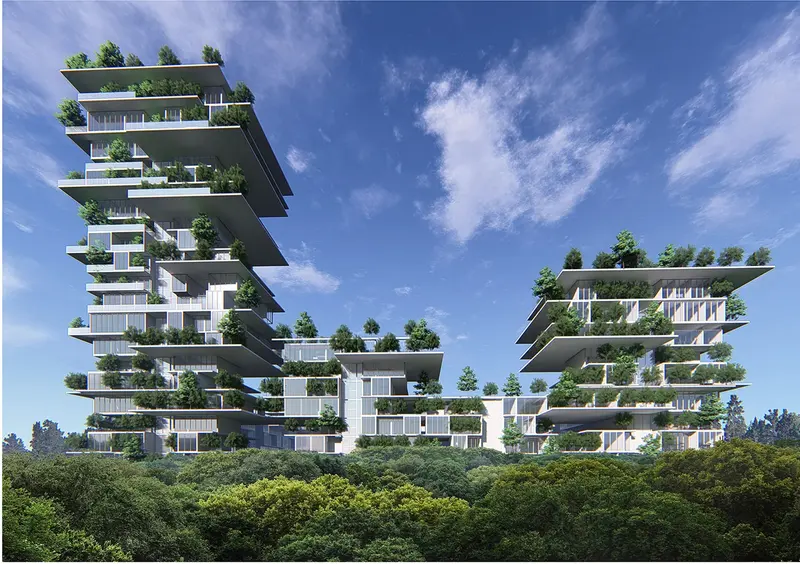
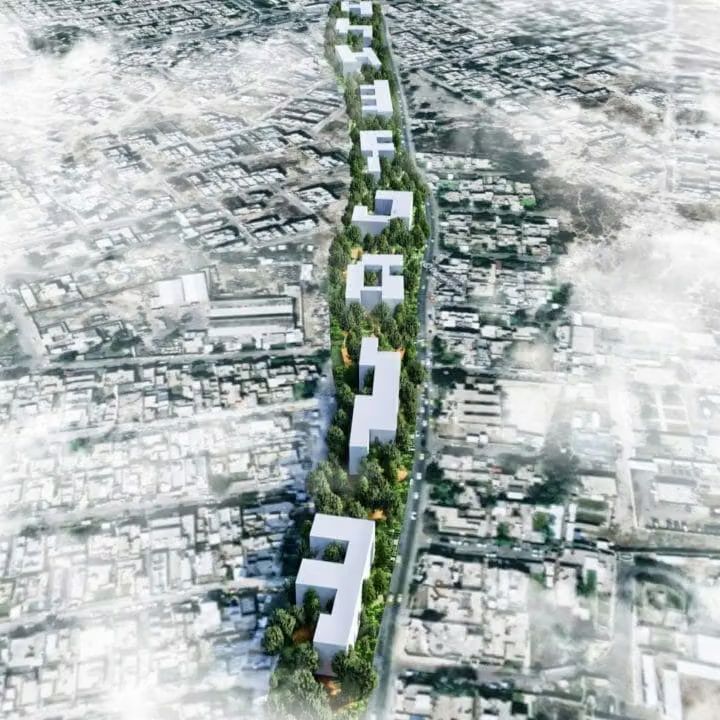
“Fordist production, ‘rural development’, post-Fordist production, new urbanism: what are we left with today? Buildings that have lost their purpose; sprawling urban systems that have lost their centres. Degraded or destroyed habitats, natural resources, and a list that could go on much longer. In response to this situation, BAĞ says: ‘Let us revive the natural landscape in the city. Drawing boundaries around nature did not bring us healthier built environments; now let us make peace with it and, through landscape, rebuild the idea of the city that has been disappearing along the way.’ Both modernism and new urbanism believed that formal models could remedy the problems of the city. BAĞ, by contrast, argues for a model that is more open-ended and strategic than either of these. Existing and historical conditions have left behind the abandoned, degraded and unused areas described above, ready to be reclaimed. The concept focuses primarily on these gaps in the city. Its design approach aims to present a series of proposals structured through landscape urbanism or used as references for the theory. Within this framework, BAĞ examines past, present and future scenarios, identifying its key terms as uncertainty, open-endedness, flexibility and complex systems. In the design, water, storage and filtration; wastewater and groundwater; utilities and transport systems make up a large part of urban infrastructure, the central concern of landscape urbanism. Education, recreation, law and order, and public administration are also included. Integrating these functions within a usable open space is the main aim of the design. Biodiversity and ecological systems, landscape ecology, geomorphology, hydrology, climate and vegetation, identifying existing ecological resources and introducing new ones are all important. The aim is to support and establish wildlife and create a self-sustaining landscape. Transitions between programmes are structured through the flows of products and energy, people and living organisms. Soil rehabilitation, although not present in every project, is a practice that can be included in the methodology. The use of alternative and renewable energy sources is essential to the projects. Wind and water power and photovoltaic ground surfaces are frequently encountered. Plants are used with insulation in mind. A phased development is proposed for damaged habitats. Describing BAĞ as ‘unfinished architectonics’ places it within concepts of architecture and urban design that are open-ended, flexible, unfinished, adaptable and capable of being reconfigured. Viewed through the dynamics of the street itself, these terms are not a new design language; they are, on the contrary, adjectives that describe any street life. The BAĞ project likewise advocates using landscape—with its capacity to live, grow and come to an end, just like the city—to challenge the boundaries of modern urbanism and allow a more natural form of development.
Competition